


From the Factory to the Ecosystem
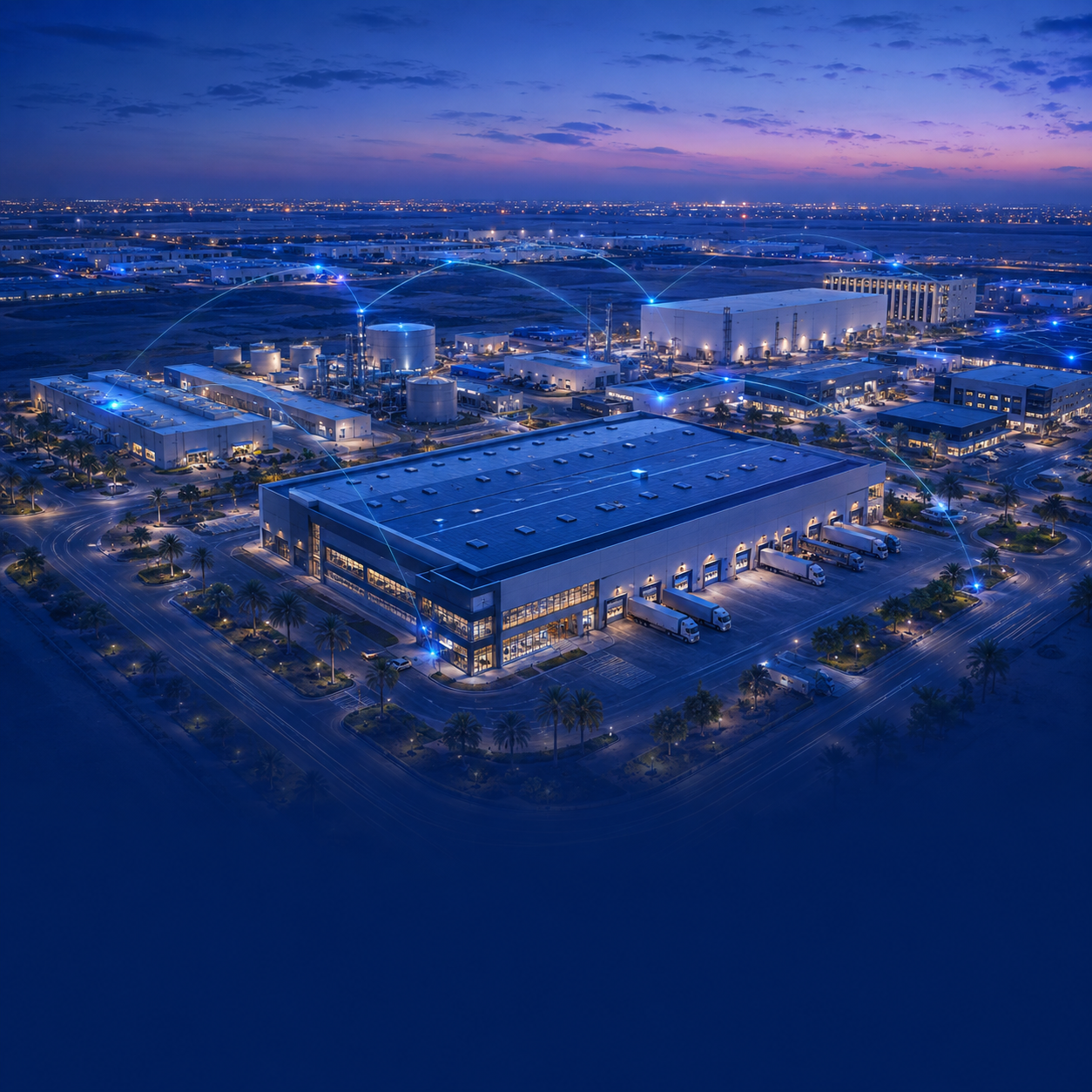
From the Factory to the Ecosystem: How Are Modern Industrial Cities Changing?
In the contemporary economic landscape, the industrial sector is undergoing a radical transformation that goes beyond the traditional boundaries of production and manufacturing. The concept of an industrial city is no longer limited to being an area that includes adjacent factories sharing a single geographical space; rather, it is now viewed as an "integrated industrial ecosystem." This fundamental transformation is an inevitable response to the requirements of modern investment and the changing nature of global supply chains.
Changing Needs: Beyond Basic Infrastructure
Historically, the traditional concept of industrial cities was based on a simple equation: providing a level plot of land, a basic road network, and sources of power and water. This model was sufficient in the era of stable, standardized production. Today, however, in light of the Fourth Industrial Revolution and accelerating global competition, providing land and basic infrastructure alone is no longer sufficient to attract sustainable investments or enable factories to survive and grow.
Modern industry needs an integrated, dynamic environment that reduces economic and time waste and provides flexible solutions to daily and future challenges. Operating costs and the speed of access to markets have come to depend directly on the quality of the ecosystem surrounding the factory, not only on the efficiency of the machinery within its walls.
Dissecting the Modern Industrial Ecosystem
For the integrated industrial ecosystem to operate efficiently, its core elements must be interconnected within one harmonious network that includes:
Production facilities: factories of various categories and sizes.
Advanced infrastructure: sustainable power and water networks, and modern systems for drainage and resource management.
Logistics services: smart warehouses, shipping zones, and distribution centers.
Support services: professional workshops, maintenance centers, and commercial and legal services that support daily operations.
Digital and technological solutions: ultra-high-speed communication networks and data-driven smart facility management systems.
Logistics: The Artery Connecting the Factory and the Market
Logistics is the fundamental pillar that gives the industrial ecosystem its true investment value. The ease of moving raw materials to and from the factory, and the speed at which finished products flow toward local and global markets, are the primary determinants of the profitability of any industrial project.
The strategic location of the industrial city and its direct connection to rapid transportation and logistics networks transform the site from merely a factory address into a sustainable competitive advantage. This contributes directly to reducing transportation and logistics service costs and shortening delivery times, which are critical elements in the modern supply chain.
Support Services: Focusing on Production First
In modern industrial cities, not everything a factory needs must be handled within its walls. The presence of an ecosystem rich in diverse support services, such as specialized maintenance, shared storage, catering, and professional and commercial services, allows the investor and the facility to focus fully on the core of their production process and the development of their products, relying on trusted partners within the city to perform other operational services efficiently and safely.
Industrial Integration and Cooperation: Neighbors, Not Merely Facilities
The most distinctive aspect of the industrial ecosystem concept is its ability to create an environment of "industrial integration." When factories come together in an integrated environment, they are transformed from geographically adjacent facilities into partners in value chains.
Factories can exchange resources and services, benefit from one another's outputs as raw materials, and build logistics and commercial alliances that reduce the overall costs for everyone and open new horizons for joint industrial innovation.
Smart Management and Sustainability as a Structural Approach
Modern industrial cities rely on technology and data as essential tools for management and efficiency improvement. Through smart monitoring systems for power and water networks and facility management, maintenance needs can be predicted and waste can be reduced proactively.
This direction is directly linked to sustainability, which is no longer a separate environmental subject but has become an integral part of the ecosystem's design. Efficient resource use, industrial waste management, and emissions reduction contribute to lowering the investor's long-term operating costs and enhancing the global competitiveness of their products.
From Infrastructure to the "Investor Experience" in Riyadh
As a practical application of this advanced approach to shaping modern investment environments, Taya Industrial City stands out as a pioneering model that translates the concept of the integrated industrial ecosystem into reality in the heart of the capital, Riyadh. Taya Industrial City is located in an exceptional strategic location along Riyadh's Eastern Ring Road, ensuring easy access and direct connectivity for industrial and logistics projects to the Kingdom's most important routes and key gateways.
With the approaching launch of the off-plan sales phase for the Taya Industrial City project, an exceptional investment opportunity is available for investors to build and establish their projects from an early stage and with highly competitive pricing advantages. This phase is distinguished by offering diverse and integrated options that meet the needs of different activities, including:
Medium industrial land: designated for advanced industries that require carefully planned operating spaces.
Light industrial land: suitable for manufacturing industries, workshops, and light technologies.
Logistics land: equipped for storage, shipping, smart distribution, and supply chain services.
Worker housing land: intended to provide a nearby and sustainable residential environment for work teams, reduce the logistical cost of workforce transportation, and ensure their stability.
Competitive Advantages and Promising Opportunities
To achieve investment flexibility and meet diverse needs, land areas in Taya Industrial City start from 1,000 square meters, giving investors the freedom to select the area that precisely suits the scale of their operations and their potential for future expansion. The investment value is further enhanced by exceptional prices starting from SAR 1,300 per square meter, an exclusive advantage associated with the off-plan sales phase that ensures superior economic feasibility for the investor from the outset.
Taya Industrial City goes beyond the traditional thinking that links investment with waiting. Purchasing industrial land through off-plan sales does not mean postponing work until the city's development is complete and it officially opens at the end of 2027. Rather, the ecosystem allows investors to begin immediately with licensing procedures and the design and construction of their facilities while the city's infrastructure development works are being completed, ensuring faster market access and the start of actual production as soon as the city is inaugurated.
Conclusion: The Future Belongs to Those Who Build the Ecosystem
The true investment value of the industrial cities of the future will not be measured solely by their geographical areas or by the number of factories they host, but by the quality of the ecosystem that connects these factories with one another and with markets, resources, and services.
Industrial investment in an integrated environment such as Taya Industrial City is a smart partnership in an ecosystem designed specifically to accelerate growth, reduce operating costs, ensure sustainability, and support long-term scalability.