


?Flexibility of Industrial Assets: How Do Concrete Buildings Become Drivers of Investment Growth
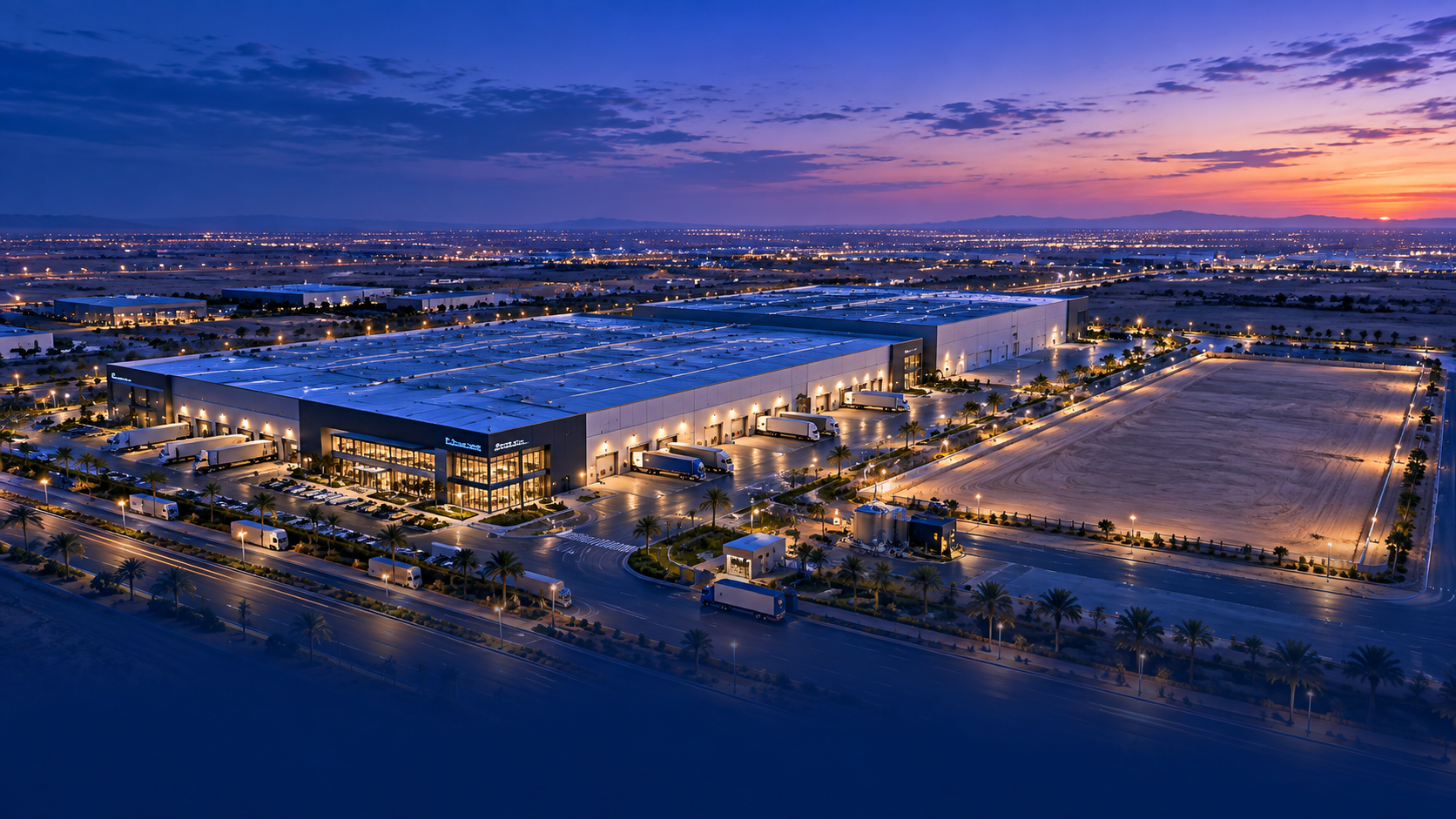
?Flexibility of Industrial Assets: How Do Concrete Buildings Become Drivers of Investment Growth
In today's economic and manufacturing environment, establishing an industrial facility is one of the most capital-intensive investment decisions and one of the most consequential for companies' financial future. For decades, a culture of "fixed design" prevailed in the industrial sector, with factories built to meet a specific production volume and the technologies of a particular generation, on the assumption that market conditions and supply chains would remain stable. Yet this model has shown its limitations in the face of rapid technological changes, sharp fluctuations in demand, and the accelerating emergence of advanced manufacturing technologies.
Reconsidering the planning approach and moving it toward "adaptive, expandable design" represents a strategic choice aimed at reducing investment risks and preserving capital. Operational analyses support this view: the cost of modifying industrial facilities with rigid structures after they begin operating in order to reach doubled production capacities may be high, in addition to the financial losses resulting from downtime and operational stoppages. Accordingly, the design of a modern factory goes beyond being merely an engineering plan for a building; it becomes a financial and operational planning document that ensures the flexibility of assets and their ability to accommodate gradual growth without wasting resources or disrupting production processes.
Movement and Flow Engineering: Shaping Internal Spaces to Reduce Operational Waste
The success of a factory's design depends on a prior, systematic analysis of movement routes and the flow of materials and personnel within the facility. "Systematic Layout Planning" is one of the most important methods used to determine the optimal proximity between different departments based on the intensity of operational exchange between them, ensuring smooth processes from receiving raw materials through to shipping the final product.
Structural Specifications Governing Expansion:
- Open-span structures: Using prefabricated structural systems with wide spans and a minimum number of internal columns gives factory management complete freedom to rearrange machinery and production lines smoothly as market requirements change.
- Clear heights for vertical storage: Making use of clear heights of no less than 9 to 12 meters to implement high-bay automated storage and retrieval systems increases the available storage capacity without the need to expand horizontally across the land area.
- Load-bearing capacity of concrete floors: Installing chemically treated and reinforced concrete floors for high static and dynamic loads (no less than 5 to 8 tons per square meter) ensures their ongoing readiness to accommodate new heavy machinery or logistics lifting equipment without cracking or needing to be recast.
Modular Design: Building a Flexible Facility That Ensures Expansion Without Disrupting Production
To avoid overbuilding, which consumes a large portion of capital in the early stages of establishing industrial facilities, the modern investment approach relies on "modular design." This approach allows the factory to be divided into independent operational units that can be added to and replicated as the facility's market share grows.
Modular design rests on three pillars:
- Expandable utility networks: Establishing utility channels and routes (such as electricity, water, compressed air, and manufacturing gases) above production halls or in prepared underground trenches with reserve capacity of up to 50% of expected future consumption. This planning enables the facility to supply new production lines with operational utilities within a few days, without breaking up floors or restructuring the main networks.
- Industrial wastewater treatment and energy management systems: Designing independent units to treat water and industrial waste according to the type of activity, while integrating waste-heat recovery technologies and advanced insulation solutions to reduce energy use, achieving tangible financial savings in the project's recurring operating costs.
- Digital readiness for advanced technologies: Equipping manufacturing halls with high-speed data networks and sensors to monitor equipment performance and predict maintenance needs in advance, and establishing the digital infrastructure needed to connect devices through the Industrial Internet of Things, paving the way for a gradual transition toward smart factories that rely on real-time data.
Effective Logistics Connectivity: How Do Loading and Unloading Docks Become a Lifeline for Profitability?
A factory is not an isolated unit; it is a link in an extended supply chain. Therefore, even exceptional operational efficiency within production lines may disappear entirely if congestion in the loading and unloading area prevents raw materials from entering or finished products from reaching markets.
Taya Industrial City: An Advanced National Model for Enabling Investment and Smart Establishment
Moving from theoretical and analytical planning frameworks to practical application on the ground requires choosing a real estate and industrial environment that offers all these engineering and logistics elements. Taya Industrial City, situated in an exceptional strategic location along Riyadh's Eastern Ring Road, emerges as a practical model designed specifically to meet the requirements of flexible establishment and future expansion.
Taya Industrial City stands out for a set of unique investment and operational advantages:
Flexibility in Establishment and Variety of Plot Sizes: Land plots in Taya Industrial City start at 1,000 square meters, offering a flexible investment solution that allows small and medium-sized investors as well as major companies to choose the exact area that matches their facility's engineering study, with the possibility of future expansion by combining neighboring plots.
- Integration of Different Investment Activities: The city offers a specialized environment divided geographically and organizationally to include:
- Light Industrial Land: Allocated to manufacturing activities, precision assembly, and advanced workshops with flexible environmental requirements.
- Medium Industrial Land: Prepared to accommodate large structural loads and large-scale modular designs requiring extended production lines and high-capacity infrastructure.
- Logistics Land: Intended for distribution centers, smart warehouses, and advanced transport systems.
- Residential Land for Workers: Intended to provide integrated residential complexes close to workplaces, reducing personnel transportation costs and improving workforce stability and job satisfaction.
Investment Price Point and the Off-Plan Sales Stage: Taya Industrial City offers an exceptional investment opportunity through competitive pricing starting at SAR 1,300 per square meter during the off-plan sales stage. This advantage allows investors to direct a greater share of their capital toward the factory's operational and technical components, reducing the capital burden of establishing the land component.
Parallel Development and Speed to Market: Buying land during the off-plan sales stage does not mean waiting for all infrastructure development works to be completed and for the city to open at the end of 2027. Rather, it offers an important operational advantage that allows investors to begin obtaining municipal and environmental permits, preparing engineering designs, and building their facilities in parallel with the city's development works. This parallel progress reduces the project preparation period by up to 50% and ensures that the facility is ready to begin actual production as soon as the city is inaugurated.
The Future Belongs to Flexible Facilities: Engineering the Decisions That Make an Investment Difference
Establishing a successful, resilient factory no longer rests on relying on limited traditional building solutions. Rather, it stems from applying a comprehensive planning and engineering approach that makes the facility a living asset capable of adapting and growing. Bringing together a modular internal design with smooth flows, digitally equipped infrastructure, and membership in an integrated industrial ecosystem connected logistically to surrounding routes, such as Taya Industrial City in Riyadh, is the real formula for reducing operational risks, lowering production costs, and securing profitable investment expansion over the long term.
The Ready-Built Factory Model: How Do Companies Save Time to Achieve a Faster Return on Industrial Investment?
In today's business environment, marked by intense competition and rapid change, the greatest challenge for an industrial investor is no longer limited to securing capital, choosing machinery, and defining products. Time has become the decisive measure on which the success or failure of an investment depends. The period between the decision to commit capital and the start of actual operations and revenue generation is a fundamental factor in calculating financial risks. From this perspective, the concept of ready-built factories has emerged as one of the leading operational and strategic solutions that has brought about a structural change in how industrial facilities are established and managed.
The ready-built factory option goes beyond being merely a functional building shell. It represents an integrated economic model intended to enable investors to direct their full attention and capital toward the core of manufacturing activity, such as technology, development, and supply chains, instead of exhausting resources in prolonged construction planning stages and dealing with the complexities of building and infrastructure services.
The Difficult Investment Equation: Immediate Establishment or Building Structures from Scratch?
At the start of a project, an industrial investor faces two main options: undertake the extended traditional construction journey, beginning with a vacant plot of land, or rely on ready-built factories that provide an operational unit with complete utility and structural infrastructure. A systematic investment comparison shows that building from scratch usually takes between 18 and 36 months, including the preparation of engineering designs, obtaining environmental and municipal permits, contracting with builders, carrying out construction works, and connecting utilities.
This extended period entails substantial opportunity costs, as capital remains tied up without generating a financial return while the facility bears fixed financing and administrative expenses. In contrast, the ready-built factory option shortens this construction stage by up to 70%; the facility is handed over equipped with all basic requirements, reducing the preparation period to a few months devoted to installing production lines and operating machinery, followed by the immediate start of industrial production.
Shortening Time to Market: How Does Faster Operation Turn into Real Profits?
The concept of "time to market" is one of the most important financial indicators on which investment decisions in modern manufacturing sectors are based. In changing consumer and industrial markets, being first to launch provides an exceptional competitive advantage and allows a company to capture a larger market share and meet rising demand before competitors enter.
Taya Industrial City Solutions: Embodying the Smart Operational Concept in the Heart of Riyadh
As part of supporting industrial transformation and providing an ideal environment for establishing facilities, Taya Industrial City stands out as an integrated investment ecosystem in an exceptional strategic location along the Eastern Ring Road in Riyadh. Taya adopts the concept of offering flexible operational solutions that allow investors and industrialists to make the most of time and optimize the use of capital. Taya Industrial City ensures that investors are located at the heart of the capital's logistics routes and offers a range of industrial land in Riyadh and facilities that meet different operational requirements:
- Variety of Options and Sizes: Providing land plots in a range of sizes starting at 1,000 square meters, allocated to medium and light industrial activities and logistics services, in addition to land for workers' residential complexes to reduce workforce transportation costs and provide a nearby business environment.
- Off-Plan Sales at Incentive Prices: The opportunity for early investment at competitive prices starting at SAR 1,300 per square meter through off-plan sales, with the exceptional advantage of being able to prepare designs and plans and complete the procedures for building and establishing factories and ready-built units while the city's infrastructure development is being completed. The city is scheduled to open at the end of 2027.
- Effective Logistics Connectivity: Benefiting from a direct location on major routes to facilitate truck movements and the rapid transport of products and raw materials to consumer markets, dry ports, and airports.
The Strategic Choice for Investors Who Value Time
Moving toward ready-built factories represents an intellectual and strategic shift that puts speed of execution and efficient use of resources at the forefront of industrial investment priorities. Success is no longer associated with ownership of a fixed building as much as it is with a facility's ability to start industrial production immediately, seize market opportunities, and achieve the highest return on investment in the shortest possible time. Choosing ready-built factories within an integrated ecosystem such as Taya Industrial City is the decision that gives investors the flexibility, competitiveness, and readiness that the future of industry requires.
Explore more at Taya Industrial City: https://www.tic-taya.sa