

Developed Industrial Land in Saudi Arabia
Developed Industrial Land in Saudi Arabia: How Does It Actually Shorten the Time to Production?
Many industrial investors go through the experience of establishing a factory from the ground up. When asked about the most difficult stage of the project, the answer is rarely manufacturing or marketing. The most common answer is the waiting period between signing the land contract and receiving the electricity connection, or between taking possession of the site and having it connected to the water network.
This time gap is the real difference between a project that begins production early and another that remains on hold, even though everything is ready except the land itself.
In 2025, the Saudi Authority for Industrial Cities and Technology Zones delivered 17.6 million square metres of fully developed industrial land to investors who had been waiting for this exact moment.
This article answers one question in detail: What does an investor actually receive when choosing developed industrial land instead of undeveloped land?
From Signing to Production: Three Steps Shortened by Developed Land
The time saved is the result of three elements being completed before the investor signs any contract:
The infrastructure is already planned and implemented: Electricity, water, sewage and gas services reach the land plot before it is sold. This means the investor does not have to wait through a utility extension process that may take several months.
Roads and facilities are approved as part of the city’s master plan: There is no need to obtain a separate infrastructure permit for each individual land plot, because the entire network has already been designed and licensed by the developer.
The allocation process is managed through one entity: Instead of coordinating separately with the electricity company, water company and municipality, the investor deals with one entity that manages all these processes on their behalf.
These three differences can reduce the site preparation period from a full year to only a few weeks in the best-case scenario.
Developed Industrial Land Versus Undeveloped Land: What Is the Difference?
Developed industrial land is a plot that has already been equipped with electricity, water, sewage and gas networks, as well as paved roads connecting it to the main road network.
Undeveloped land, on the other hand, is delivered as an empty plot, with the investor responsible for extending utility services and constructing roads before laying the foundation stone.
This transformation can be measured through two separate periods:
The first period, from 2007 to 2014: According to data published by the Saudi Press Agency in 2015, the total area of developed industrial land within the cities of the Saudi Authority for Industrial Cities increased from 40 million square metres to 178 million square metres over seven years, representing an increase of approximately 345%. During the same period, the number of factories increased from 1,950 to 5,600.
The second period, according to the latest data published in July 2025: The total area of developed industrial land exceeded approximately 200 million square metres. Existing industrial cities included more than 4,000 factories and 6,587 industrial, service and logistics contracts, employing more than 517,000 people.
The two periods represent eleven years of continuous growth. Behind these figures is a story that is closer to everyday life: among the employees working in industrial cities today are more than 185,000 Saudi men and 16,000 Saudi women, according to the same data.
Every plot of land that becomes a productive factory creates real employment opportunities for Saudi families, often close to where they live.
Investment Paths for Developed Industrial Land
After understanding the difference between developed and undeveloped industrial land, a practical question arises: How does the land become an operating industrial project?
In general, investors can follow one of two main paths, depending on the size of their project and whether they prefer to build from the ground up or begin operations immediately.
Direct construction is the option currently available within Taya Industrial City. Investors receive a developed industrial land plot suitable for their activity from a total of 322 plots allocated to light industries, covering an area of more than 1.338 million square metres.
The investor then develops the facility according to their operational requirements. Land allocation is subject to the developer’s requirements, primarily ensuring that the industrial activity is compatible with the designated use of the plot and that all regulatory requirements are fulfilled before the contract is signed.
The exact sizes of individual plots vary depending on the activity, and the Taya team explains the available options when reviewing each application.
Ready-built and multi-storey factories, meanwhile, represent a growing trend within the Saudi market. This option allows investors to lease or own an equipped industrial unit and begin operations without constructing a factory from the ground up.
A recent example of this trend is the Kingdom’s first multi-storey industrial building, launched in 2025 by the Saudi Authority for Industrial Cities and Technology Zones, “MODON,” in Dammam First Industrial City.
This model is included in Taya Industrial City’s future plans and will be introduced during the city’s upcoming development phases.
Across the wider market, there are also specialised industrial clusters. These are developments dedicated to one specific sector, such as the pharmaceutical industries cluster in Sudair City for Industry and Business.
The cluster includes Sudair Pharmaceutical Company’s factory, which covers an area of 77,000 square metres and was inaugurated in November 2023 as the first factory in the Kingdom to produce oncology medicines and highly toxic pharmaceutical products.
Why Has Land Readiness Become More Important Than Price?
For many years, price was the primary factor when selecting an industrial location. Today, this concept has changed.
Site readiness has become one of the most influential factors in an investor’s decision because it shortens the implementation period and accelerates the start of operations.
This can be seen in documented international experiences. In the US state of Mississippi, Governor Tate Reeves announced that the state had attracted approximately USD 85 billion in announced investments since 2020.
He attributed a significant part of this success to the state’s early investment in preparing 30 industrial sites with infrastructure and utilities, as well as providing energy capacity before investors arrived.
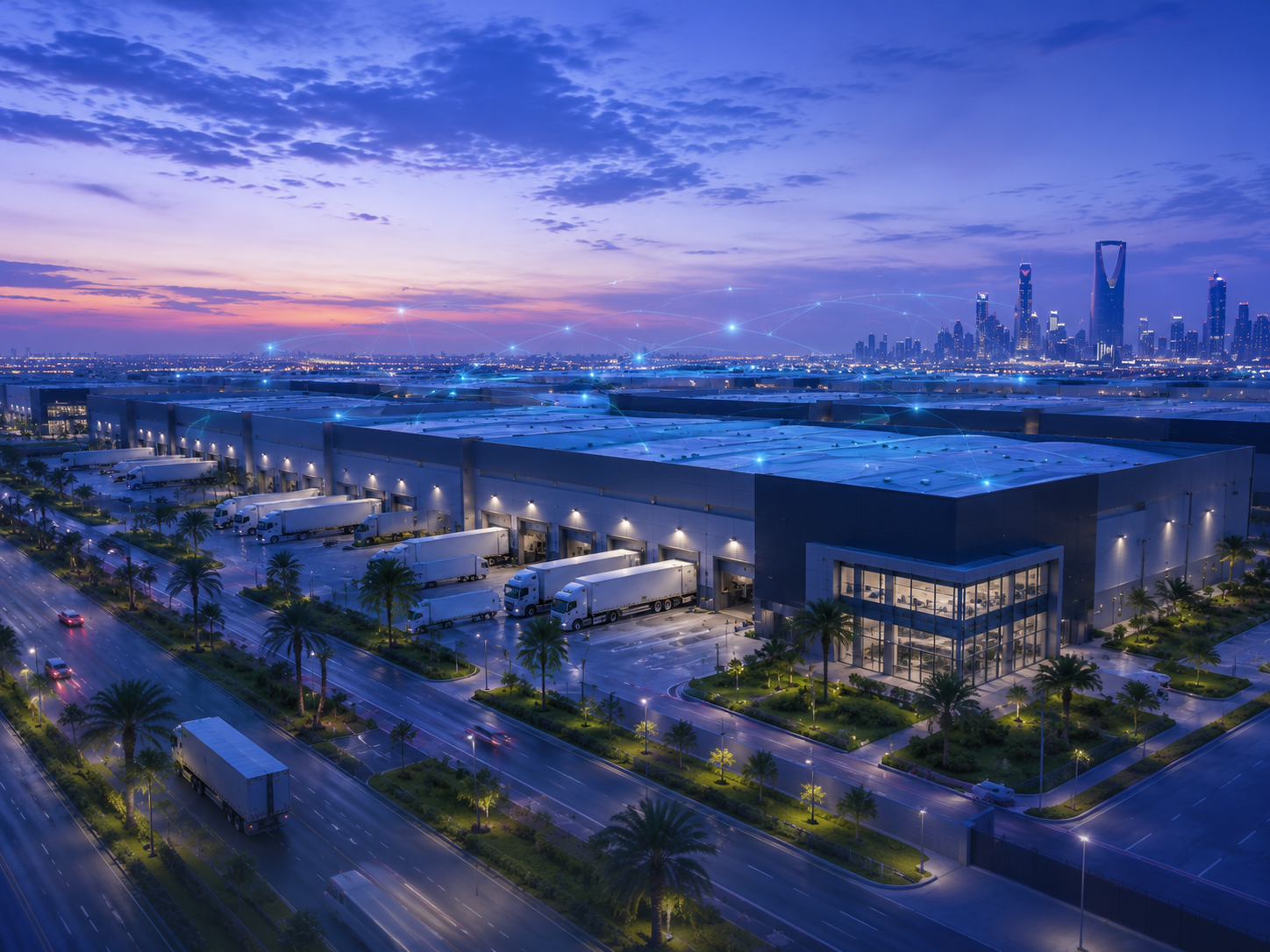
This approach is reflected in Taya Industrial City, which has developed infrastructure designed to accelerate the launch of industrial projects.
According to the city’s official profile, the development includes:
- 322 developed industrial plots allocated to light industries
- A development area exceeding 1.338 million square metres
- Main roads measuring 60 metres in width, collector roads measuring 30 metres and secondary roads measuring 20 metres
- Three main entrances through the extension of the Eastern Ring Road, Old Al-Kharj Road and Port Said Road
- Direct access to the Riyadh–Al-Kharj Road
This is where one of Taya Industrial City’s key advantages becomes clear. The city includes commercial and residential land within its overall master plan.
This means that factories operate within an integrated environment that supports their daily operational requirements.
For example, a new factory can benefit from nearby commercial services that provide daily operational needs, such as maintenance, supplies and supporting office services.
At the same time, employees can access residential options closer to their workplace.
This reduces commuting time, improves workforce stability and minimises operational interruptions caused by the distance between factories, services and residential areas. These factors have a direct impact on operational efficiency and production continuity.
How Do You Choose Ready Industrial Land Before Signing the Contract?
The quality of developed industrial land depends on how well its infrastructure matches the requirements of the industrial activity.
The needs of a food packaging factory, for example, are different from those of a pharmaceutical factory or a precision electronics facility.
For this reason, the Saudi Authority for Industrial Cities continues to invest in infrastructure development.
During 2025, it announced the implementation of projects to increase electrical capacity in several industrial cities, supporting expansion and responding to the growing demand for energy.
Before purchasing or leasing industrial land, investors should ask:
- Is the electrical capacity sufficient for the project’s current and future needs?
- Are water, gas and telecommunications networks available in a way that suits the nature of the activity?
- Does the infrastructure allow for future expansion when production capacity increases?
At Taya Industrial City, the infrastructure has been designed to support future growth through fibre-optic telecommunications networks, electricity, water and gas services, in addition to a road network that facilitates logistics movement both within and outside the city.
The Growth of Developed Industrial Land and Its Contribution to Saudi Vision 2030
The expansion of developed industrial land is part of the Kingdom’s efforts to strengthen its industrial base and increase the sector’s contribution to the national economy.
MODON’s 2025 results demonstrate the continued growth of investments and facilities within industrial cities, supporting the objectives of the National Industrial Strategy and Saudi Vision 2030.
Developed industrial land provides the essential services required throughout the investor’s journey. It also reduces the time, effort and risks associated with the establishment phase.
The more prepared the site is, the faster implementation decisions can be made, the sooner the project can begin production and the greater its ability to expand as the business grows.
For this reason, land has become a fundamental part of a project’s success strategy.
Ready to Get Started?
For anyone planning to launch an industrial project and searching for industrial land for sale in Riyadh within a fully developed infrastructure environment, the Taya Industrial City team is ready to help select the right plot and explain the available options based on the nature of the activity and its future plans.
Contact us:
📞 920004451
Or click the WhatsApp button